
What is Asafoetida?
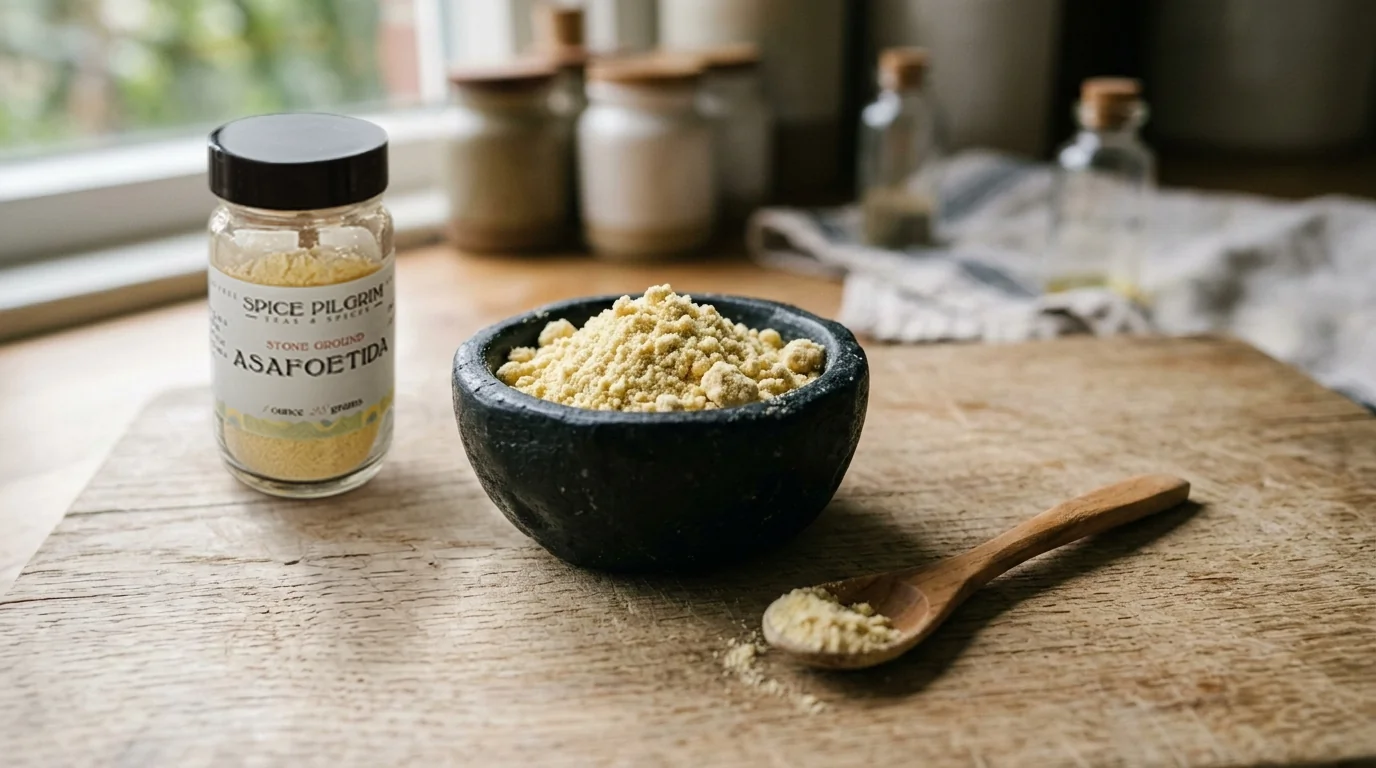
Asafoetida is a resin derived from the root of the Ferula plant, native to Central Asia and Iran. After harvesting, the resin is dried and ground into a powder, often blended with rice flour to make it easier to handle and measure. Asafoetida has been a cornerstone of Indian and Middle Eastern cooking for centuries. The spice is prized for its ability to add depth and a savory, onion-like quality to dishes. In its raw form, asafoetida has a strong sulfurous smell, but this transforms into a mild, pleasant aroma when cooked in oil or ghee.
How do I use Asafoetida?
Use asafoetida sparingly. A small pinch (roughly 1/8 to 1/4 teaspoon) is enough for most recipes serving four to six people. Heat oil or ghee in a pan over medium heat, then add the asafoetida powder. Stir for a few seconds until the raw smell dissipates and the spice releases its cooked aroma. Add your other ingredients immediately after blooming the asafoetida.
Asafoetida works best in lentil dishes, vegetable curries, rice pilafs, and pickles. It is a key ingredient in South Indian sambar and rasam, where it balances the tangy tamarind and lentil base. The spice also appears in North Indian tadka (tempering) for dal and kadhi. Because asafoetida mimics the flavor of onion and garlic, it is often used in Jain and Brahmin cooking, where alliums are avoided.
What does Asafoetida taste like?
Raw asafoetida has a pungent, sulfurous aroma that can be off-putting. Once cooked, the flavor mellows into a savory, umami-rich taste reminiscent of sautéed onions and garlic. The cooked spice adds a subtle background flavor that enhances other ingredients without overpowering them. There is a faint bitterness if too much is used, so measure carefully.
The texture of Asafoetida powder is fine and slightly sticky due to the rice flour blend. This helps it disperse evenly in hot oil.
What are the traditional uses of Asafoetida?
Asafoetida has been used in traditional Indian and Persian cooking for its digestive properties. In Ayurvedic practice, it is believed to support digestion and reduce bloating, which is why it is often added to bean and lentil dishes. The spice is also valued for its ability to balance the flavors in vegetarian meals, adding richness without animal products or alliums.
These uses reflect traditional culinary practices. Spice Pilgrim does not make health claims about any product.
How should I store Asafoetida?
Store asafoetida in an airtight container in a cool, dark place. The spice has a strong odor that can permeate other ingredients, so keep it sealed tightly. A glass jar with a screw-top lid works well. Stored properly, asafoetida will retain its potency for up to one year. The rice flour in the blend helps prevent clumping and extends shelf life.
What goes well with Asafoetida?
Asafoetida pairs well with Cumin Seeds, Coriander Seeds, Turmeric, and Tellicherry Black Peppercorn. It is often used alongside mustard seeds and curry leaves in South Indian tempering. The spice also complements Fenugreek Seeds and dried red chilies in pickles and spice blends.
For a complete spice mix, try combining asafoetida with the ingredients in Chaat Masala or Sambar Masala, both of which already include asafoetida in their traditional formulations.
Can I substitute Asafoetida with something else?
If you do not have asafoetida, use a small amount of garlic powder or onion powder as a substitute. Start with 1/4 teaspoon of either powder for every pinch of asafoetida called for in the recipe. The flavor will not be identical, but it will provide a similar savory base. For a more authentic alternative, finely mince fresh garlic or shallots and cook them in oil until fragrant.
There is no perfect substitute for asafoetida’s unique flavor, so the dish may taste slightly different. If you cook Indian or Persian food regularly, it is worth keeping asafoetida on hand.
Is Asafoetida the same as Hing?
Yes. Asafoetida is called “hing” in Hindi and other South Asian languages. The terms are used interchangeably. Both refer to the same resin-based spice powder. In Indian grocery stores, you will often see it labeled as hing. The product is identical whether labeled as asafoetida or hing.
Why does Asafoetida smell so strong?
The strong smell comes from sulfur compounds in the raw resin. These compounds are volatile and dissipate when the spice is heated in oil or ghee. The cooking process breaks down the sulfur molecules and releases the more pleasant, savory aroma. Always cook asafoetida before adding other ingredients to avoid the raw smell in your finished dish.
How much Asafoetida should I use in a recipe?
Start with 1/8 teaspoon for a dish serving four people. You can increase to 1/4 teaspoon if you prefer a stronger flavor, but do not exceed this amount. Too much asafoetida will make the dish bitter and overpower other spices. The spice is potent, so a little goes a long way. If you are new to using asafoetida, err on the side of less and adjust in future batches.