
What is Sumac?
Sumac is a deep red spice made from the dried and ground berries of the sumac shrub, native to the Mediterranean and Middle East. The berries are harvested, dried, and coarsely ground to create a coarse powder with a distinctly tart, lemony flavor. Sumac has been used in Middle Eastern and Mediterranean cooking for centuries, prized for its ability to add brightness and acidity to dishes without liquid. The spice comes from a genus of flowering plants in the cashew family, though the culinary variety is entirely safe and unrelated to the toxic sumac species found in North America.
How do I use Sumac?
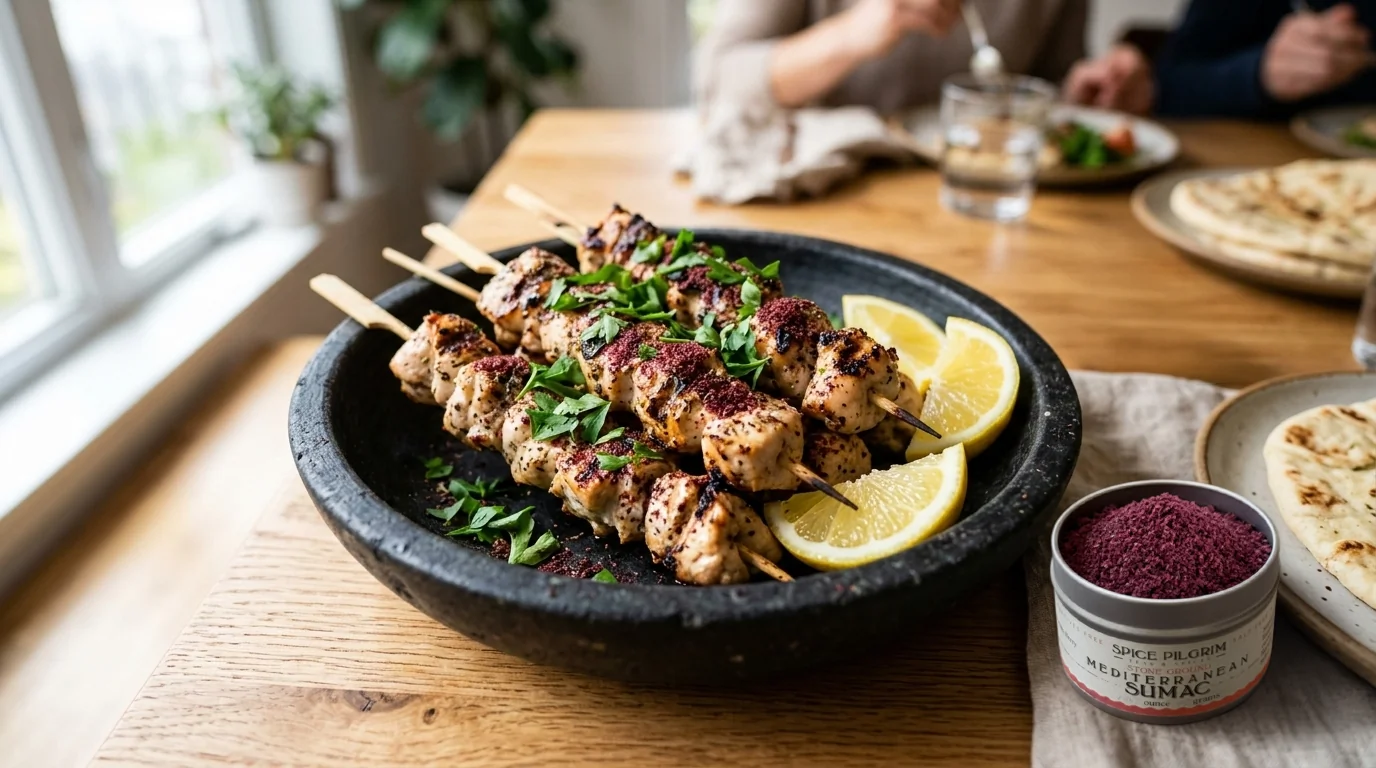
Sprinkle Sumac directly onto finished dishes as a finishing touch. The spice shines when used as a garnish on grilled meats, roasted vegetables, hummus, or yogurt-based dips. Add it to salad dressings for a citrusy punch, or mix it into rice pilafs and grain bowls. Use sumac in dry rubs for chicken, lamb, or fish before grilling or roasting. Stir it into marinades with olive oil and garlic for kebabs. Dust it over flatbreads, hard-boiled eggs, or avocado toast. Unlike most spices, sumac does not need heat to release its flavor, so add it at the end of cooking or at the table.
What does Sumac taste like?
Sumac tastes bright, tangy, and citrusy, similar to lemon juice but without the liquid. The flavor is fruity and slightly astringent, with a pleasant sourness that does not overpower. There is no heat or bitterness. The texture is coarse and slightly sticky, which helps it cling to food. The aroma is mildly fruity with earthy undertones. Sumac adds a clean, refreshing acidity that balances rich or fatty dishes. It works in the same way lemon or vinegar would, but as a dry seasoning that adds visual appeal with its deep red color.
What are the health benefits of Sumac?
In traditional Middle Eastern and Mediterranean foodways, sumac has been valued as a digestive aid and used to support overall wellness. The berries are naturally rich in antioxidants and have been part of herbal traditions for generations. Home cooks have long appreciated sumac for adding flavor to meals while reducing the need for added salt. As with all spices, sumac is used in small amounts as a seasoning, and any health effects come from regular inclusion in a varied diet. We do not make medical claims about sumac or any product.
How should I store Sumac?
Store Sumac in an airtight container in a cool, dark place away from heat and moisture. A pantry or spice drawer works well. Sumac retains its vibrant color and tart flavor for up to one year when stored properly. Exposure to light and air will dull the color and fade the lemony brightness over time. Keep the container tightly sealed after each use. Do not store sumac near the stove or in direct sunlight. If the spice loses its bright red color or the tangy aroma fades, replace it. Whole sumac berries (less common) last longer than ground sumac.
What goes well with Sumac?
Sumac pairs beautifully with grilled lamb, chicken, and fish. It complements yogurt-based sauces, tahini, and olive oil. Use it alongside Za’atar, which traditionally contains sumac along with thyme, sesame seeds, and oregano. Combine sumac with Cumin Seeds and Coriander Seeds in spice rubs for roasted vegetables. It works well with chickpeas, lentils, eggplant, tomatoes, and onions. Pair it with fresh herbs like parsley, mint, and cilantro. Add sumac to dishes that feature Aleppo Pepper or Urfa Biber Pepper for layered Middle Eastern flavor. It balances creamy cheeses like feta and labneh.
Is Sumac the same as the poisonous plant?
No. Culinary sumac comes from species in the Rhus genus that produce edible berries, primarily Rhus coriaria. These are entirely safe for consumption and have been used in cooking for thousands of years. Poison sumac (Toxicodendron vernix) is a different plant entirely, native to North America, and is not related to the spice. The two plants are not botanically similar beyond sharing a common name. All Sumac sold for culinary use is the edible variety. There is no risk of confusion when purchasing sumac from a spice retailer.
What is Sumac used for in Middle Eastern cooking?
Sumac is a staple in Middle Eastern and Mediterranean cuisines. It appears in fattoush salad, where it adds tartness to the dressing. Cooks sprinkle it over grilled meats and kebabs as a finishing spice. It is a key ingredient in Za’atar spice blends. Sumac seasons onion salads, often mixed with chopped parsley and a drizzle of olive oil. It garnishes hummus, baba ganoush, and labneh. In Turkish and Lebanese cooking, sumac flavors rice dishes and pilafs. It is used in spice rubs for roasted chicken and lamb. Home cooks dust it over flatbreads and use it to brighten slow-cooked stews.
Can I substitute lemon juice for Sumac?
Lemon juice provides similar acidity but adds liquid, which changes the texture of a dish. Sumac offers tartness without moisture, making it ideal for dry rubs, spice blends, and finishing touches where you want to avoid adding liquid. If you need to substitute sumac, use lemon zest rather than juice for a closer match in texture. A combination of lemon zest and a pinch of salt approximates the brightness of sumac. The reverse also works: if a recipe calls for lemon juice and you want to avoid excess moisture, sumac is an effective alternative. Keep in mind that sumac has a fruity, earthy quality that lemon does not fully replicate.
How much Sumac should I use?
Start with a light sprinkle and add more to taste. Sumac is forgiving and difficult to overuse, but a little goes a long way in terms of visual impact and tangy flavor. For a salad serving four people, start with one teaspoon and adjust upward. For a spice rub on one pound of chicken or lamb, use one to two tablespoons mixed with other spices. As a finishing garnish on hummus or yogurt, a generous pinch (about half a teaspoon) per serving provides both flavor and color. Taste as you go. Sumac does not become bitter with quantity, but too much will make a dish overly tart.